publications
A complete list can be found on my Google Scholar profile.
2026
-
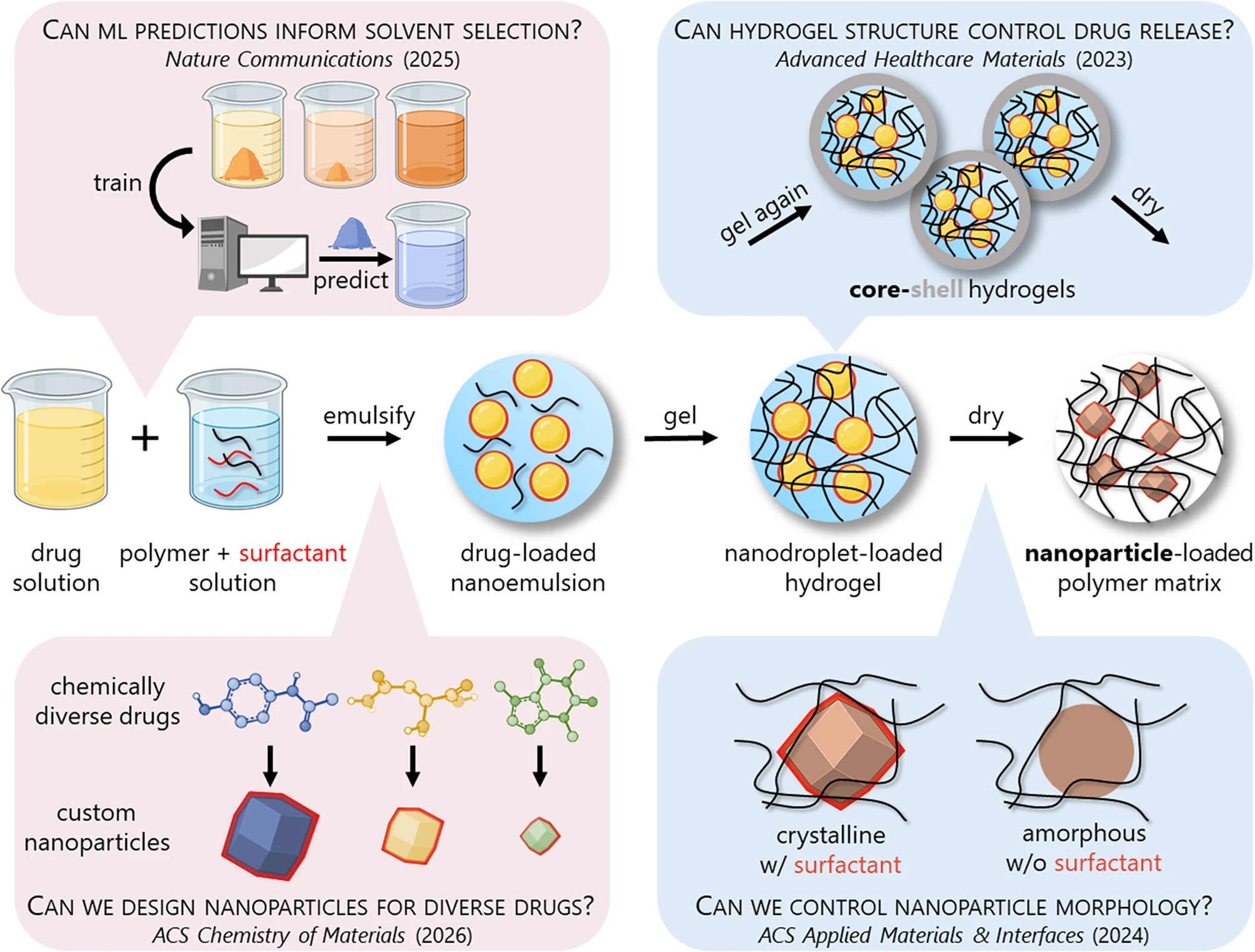 Spotlighting rising researcher Lucas Attia: from drug nanoparticle engineering to molecular property predictionLucas AttiaAAPS Open, Sep 2026
 -
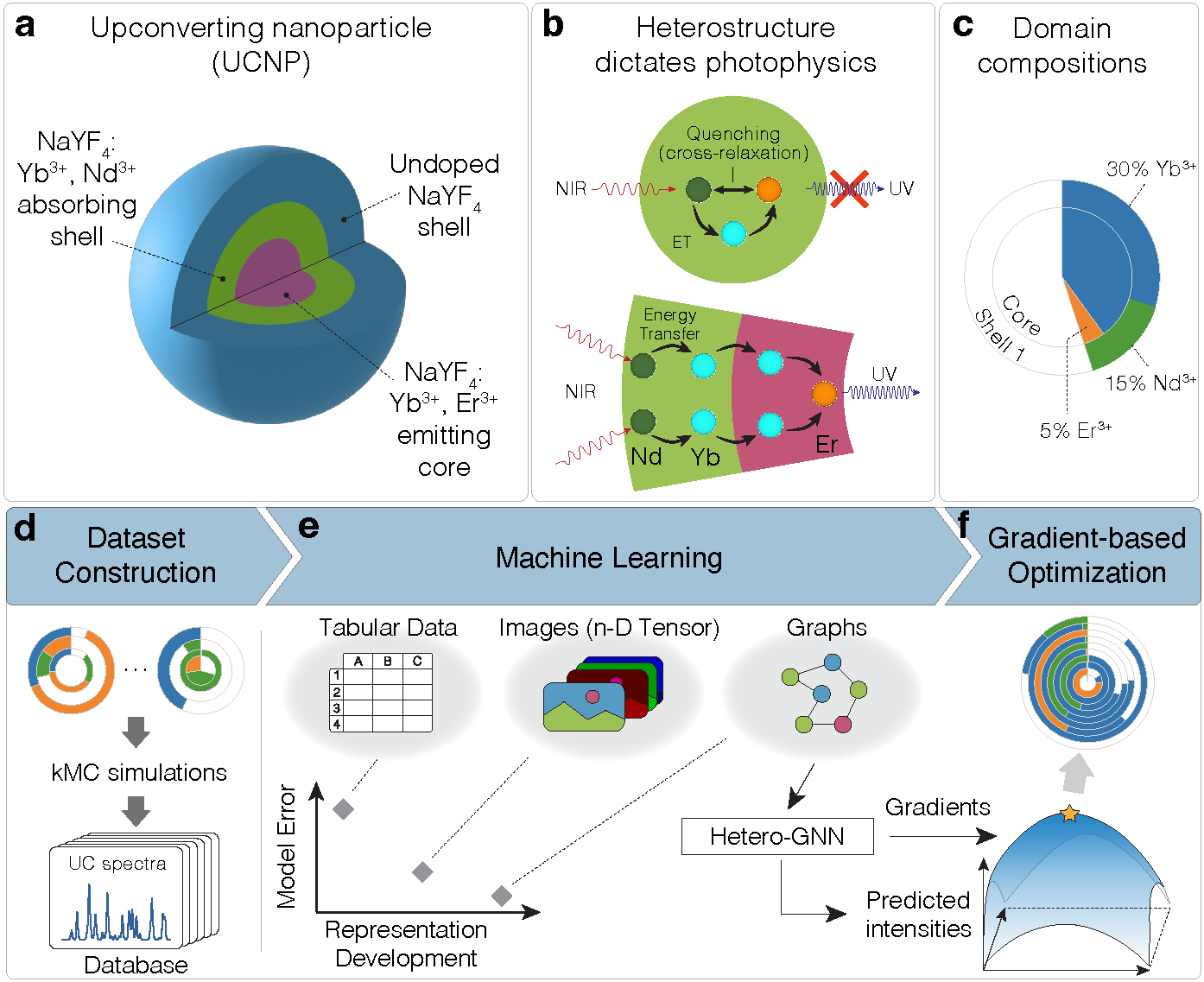 Gradient-based optimization of complex nanoparticle heterostructures enabled by deep learning on heterogeneous graphsEric Sivonxay, Lucas Attia, Evan Walter Clark Spotte-Smith, and 5 more authorsNat. Comput. Sci., Jan 2026
Applications of deep learning (DL) to design nanomaterials are hampered by a lack of suitable data representations and training data. Here we report efforts to overcome these limitations and leverage DL to optimize the nonlinear optical properties of core-shell upconverting nanoparticles (UCNPs). UCNPs, which have applications in fields such as biosensing, super-resolution microscopy and three-dimensional printing, can emit visible and ultraviolet light from near-infrared excitations. We report a large-scale dataset of UCNP emission spectra based on accurate but expensive kinetic Monte Carlo simulations (N > 6,000) and use these data to train a heterogeneous graph neural network using a physically motivated representation of UCNP nanostructure. Applying gradient-based optimization on the trained graph neural network, we identify structures with 6.5× higher predicted emission under 800-nm illumination than any UCNP in our training set. Our work reveals design principles for UCNP heterostructures and presents a roadmap for DL-based inverse design of nanomaterials.
-
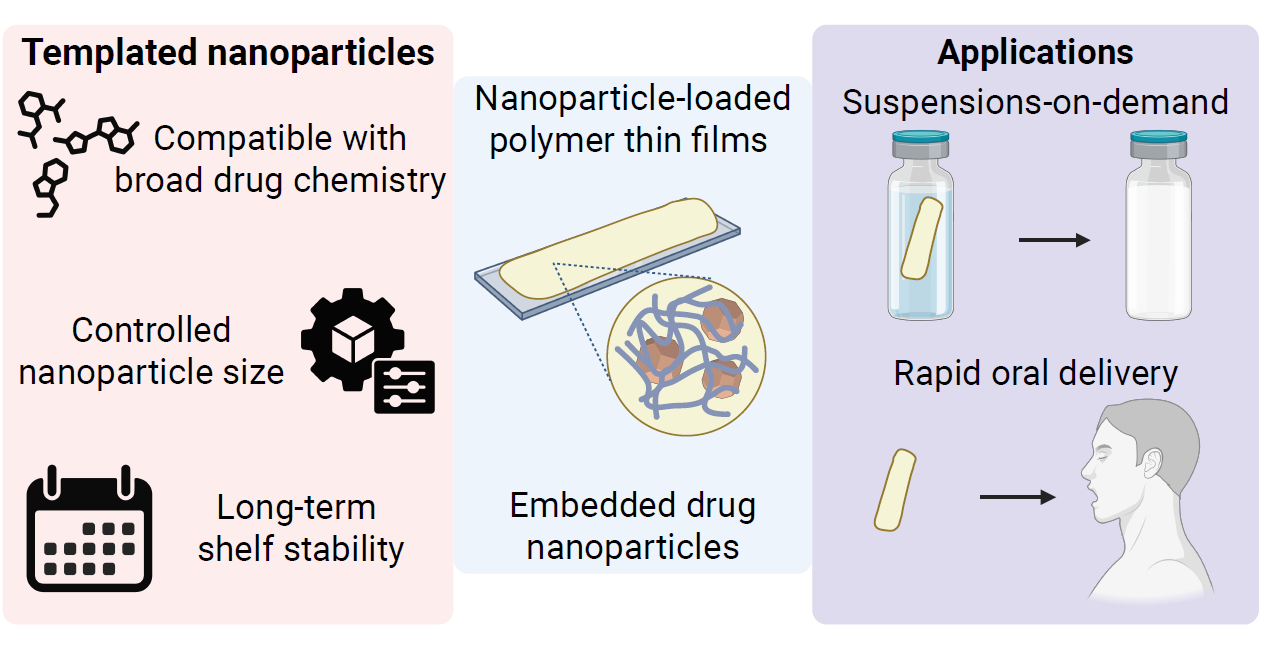 Size-controlled templating of stable drug nanoparticles from nanoemulsion precursors for versatile nanoformulationLucas Attia, Dien Nguyen, Kevin Liu, and 2 more authorsChem. Mater., Jan 2026
Nanosizing drug particles has emerged as a successful approach to enable the oral bioavailability of lipophilic small molecule drugs. Scalable “bottom-up” methods have been developed to overcome the limitations and resource-intensiveness of traditional “top-down” nanoparticle production. However, bottom-up approaches are still limited in their applicability across drug chemistries, their ability to control particle size distributions, and the long-term stability of the generated nanoparticles. Here, we overcome these limitations by applying a versatile nanoemulsion templating approach to generate drug nanoparticle formulations inside a hydrogel thin film. By using different dispersed phase solvents, we formulate four chemically diverse drug molecules. Nanoparticle size is precisely tuned by controlling precursor nanoemulsion droplet size, enabling customizable formulations between 100–1000 nm. The resulting nanoparticles retain stable size distributions and solid states for at least six months at room temperature. We demonstrate the in vitro bioavailability enhancement of our nanoformulations through dramatically faster dissolution, increased apparent thermodynamic solubility, and enhanced permeability across Caco-2 cell monolayers. Notably, we quantitatively measure the solubility enhancement as a function of nanoparticle size and report a rare validation of the Ostwald–Freundlich equation. The thin-film form factor of our nanoformulations could enable applications in buccal delivery, oral delivery for pediatric, elderly, or dysphagic patients, and “suspensions-on-demand” for stable storage of point-of-care nanoparticle suspensions. Together, this work introduces a general, tunable, and shelf-stable platform for rapid fit-for-purpose pharmaceutical nanoformulations.


2025
-
 Data-driven organic solubility prediction at the limit of aleatoric uncertaintyLucas Attia, Jackson W Burns, Patrick S Doyle, and 1 more authorNature Communications, Aug 2025
Small molecule solubility is a critically important property which affects the efficiency, environmental impact, and phase behavior of synthetic processes. Experimental determination of solubility is a time- and resource-intensive process and existing methods for \textitin silico estimation of solubility are limited by their generality, speed, and accuracy. This work presents two models derived from the fastprop and chemprop architectures and trained on BigSolDB which are capable of predicting solubility at arbitrary temperatures for a wide range of small molecules in organic solvent. Both extrapolate to unseen solutes 2-3 times more accurately than the current state-of-the-art model and we demonstrate that they are approaching the aleatoric limit (0.5-1 logS) of available test data, suggesting that further improvements in prediction accuracy require more accurate datasets. The fastprop-derived model (called fastsolv) and the chemprop-based model are open source, freely accessible via a Python package and web interface, highly reproducible, and up to 2 orders of magnitude faster than current alternatives.
-
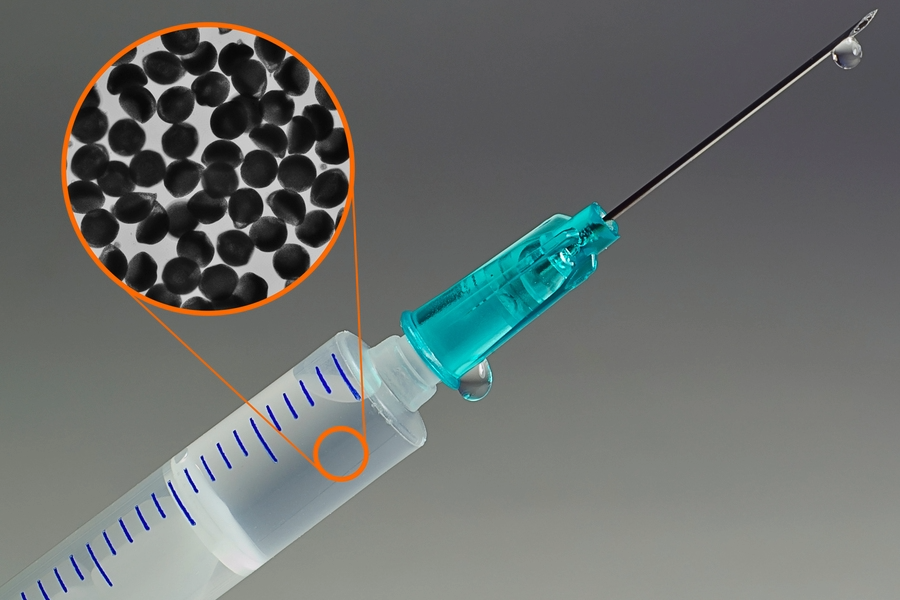 High-concentration antibody formulation via solvent-based dehydrationTalia Zheng, Lucas Attia, Janet Teng, and 1 more authorAdv. Mater., Nov 2025
Although subcutaneous (SC) delivery is the preferred administration route for immunotherapies and other biologics for improved patient compliance and lower healthcare costs, it necessitates high-concentration antibody formulations. However, high-concentration antibody solutions face significant instabilities and prohibitively high viscosities. Other approaches for high-concentration formulations have been developed, including non-aqueous solutions, which can be irritating or painful, and antibody-laden hydrogel microparticles, which require centrifugation and are limited to concentrations <300 mg mL-1. This work presents a new formulation process wherein the antibody is concentrated and encapsulated into hydrogel microparticles via solvent-based dehydration. The final dosage form is an aqueous particle suspension with a formulation concentration of 360 mg mL-1. In this process, microparticles are synthesized continuously, and antibody precipitation is realized simultaneously to dehydration, which allows for higher antibody concentrations. Antibody phase behavior and precipitation-dehydration kinetics are analyzed. The antibody is structurally and functionally stable in the microparticle post-processing and after 4 months. Injectability of the suspension meets clinical standards with glide force <20 N. For the first time, an aqueous antibody formulation at high concentrations comparable to non-aqueous formulations is presented, ideal for subcutaneous administration. The process is envisioned to be generalizable as a platform for SC delivery in multiple clinical applications.


2024
-
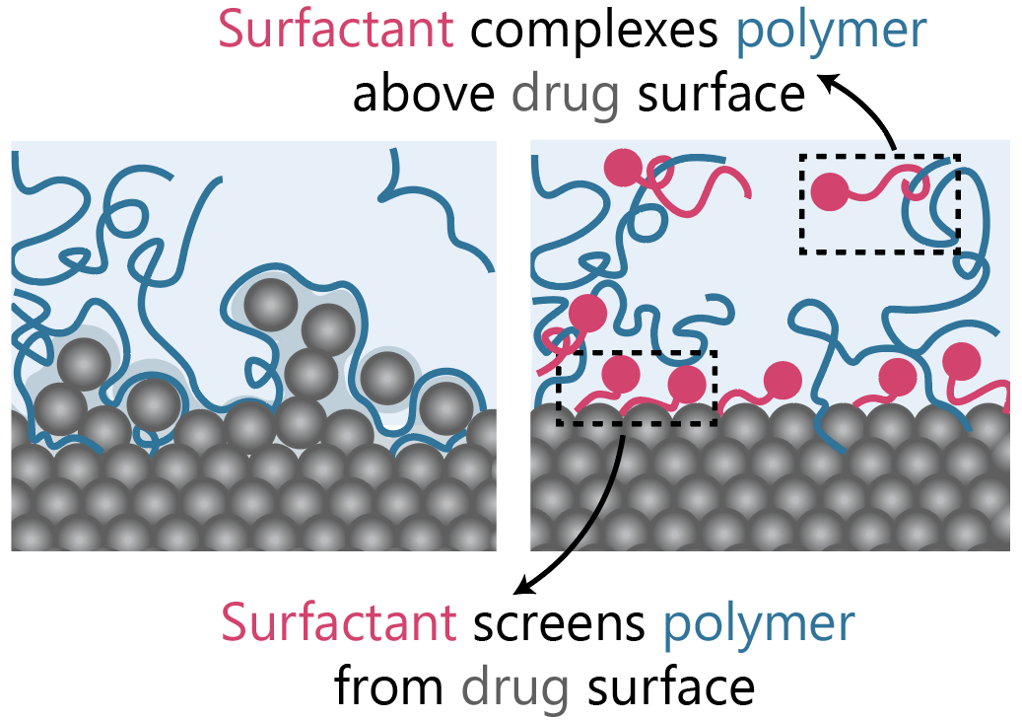 Surfactant-Polymer Complexation and Competition on Drug Nanocrystal Surfaces Control CrystallinityLucas Attia, Dien Nguyen, Devashish Gokhale, and 2 more authorsACS Appl. Mater. Interfaces, Jul 2024
Nanosizing drug crystals has emerged as a successful approach to enabling oral bioavailability, as increasing drug crystal surface area improves dissolution kinetics and effective solubility. Recently, bottom-up methods have been developed to directly assemble nanosized crystals by leveraging polymer and surfactant excipients during crystallization to control crystal size, morphology, and structure. However, while significant research has investigated how polymers and other single additives inhibit or promote crystallization in pharmaceutical systems, there is little work studying the mechanistic interactions of multiple excipients on drug crystal structure and the extent of crystallinity, which can influence formulation performance. This study explores how the structure and crystallinity of a model hydrophobic drug crystal, fenofibrate, change as a result of competitive interfacial chemisorption between common nonionic surfactants (polysorbate 80 and sorbitan monooleate) and a surface-active polymer excipient (methylcellulose). Classical molecular dynamics simulations highlight how key intermolecular interactions, including surfactant-polymer complexation and surfactant screening of the crystal surface, modify the resulting crystal structure. In parallel, experiments generating drug nanocrystals in hydrogel thin films validate that drug crystallinity increases with an increasing weight fraction of surfactant. Simulation results reveal a connection between accelerated dynamics in the bulk crystal and the experimentally measured extent of crystallinity. To our knowledge, these are the first simulations that directly characterize structural changes in a drug crystal as a result of excipient surface composition and relate the experimental extent of crystallinity to structural changes in the molecular crystal. Our approach provides a mechanistic understanding of crystallinity in nanocrystallization, which can expand the range of orally deliverable small molecule therapies.

2023
-
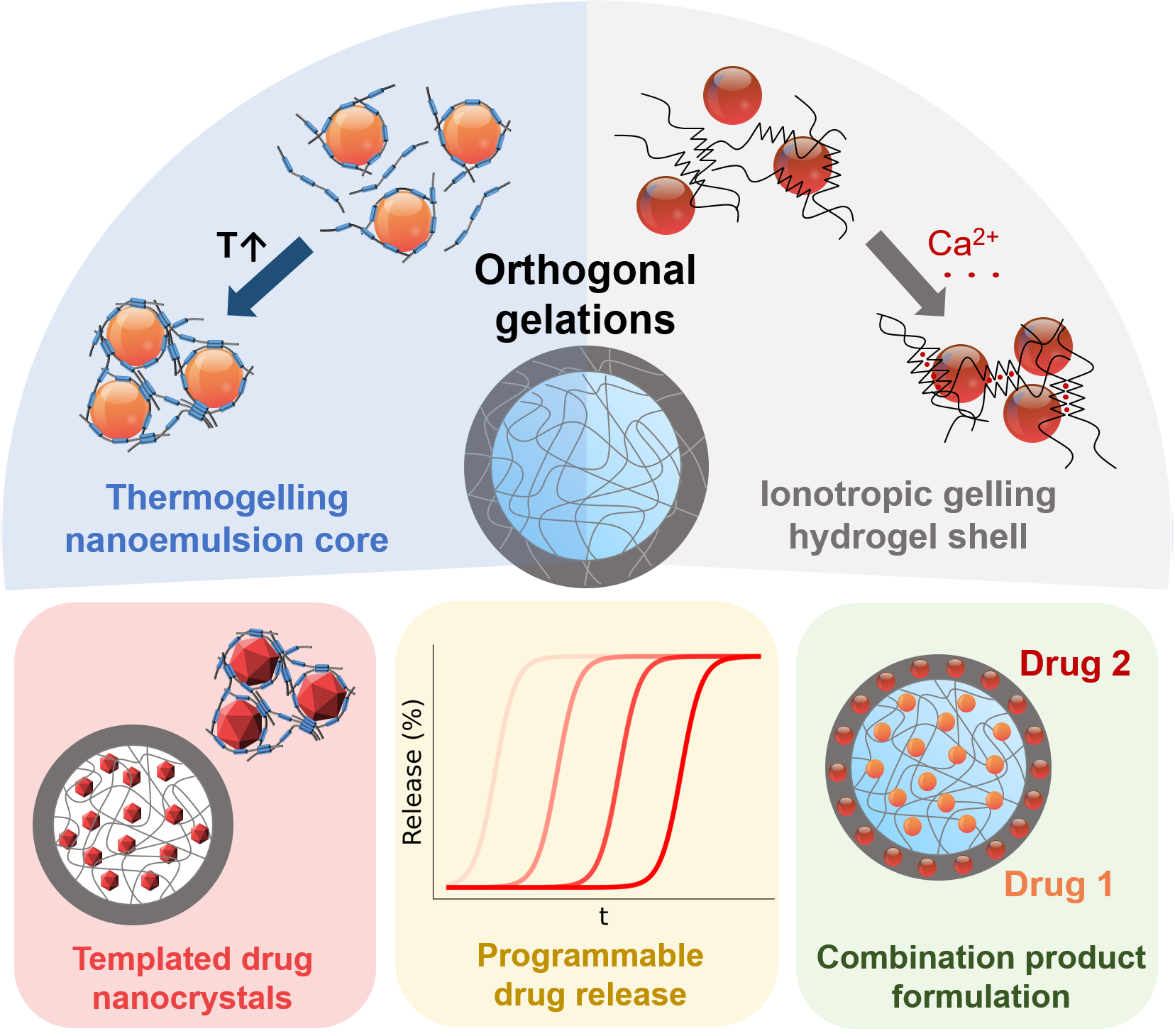 Orthogonal Gelations to Synthesize Core-Shell Hydrogels Loaded with Nanoemulsion-Templated Drug Nanoparticles for Versatile Oral Drug DeliveryLucas Attia, Liang-Hsun Chen, and Patrick S DoyleAdv. Healthc. Mater., Jul 2023
Hydrophobic active pharmaceutical ingredients are ubiquitous in the drug development pipeline, but their poor bioavailability often prevents their translation into drug products. Industrial processes to formulate hydrophobic APIs are expensive, difficult to optimize, and not flexible enough to incorporate customizable drug release profiles into drug products. Here, a novel, dual-responsive gelation process that exploits orthogonal thermo-responsive and ion-responsive gelations is introduced. This one-step “dual gelation” synthesizes core-shell (methylcellulose-alginate) hydrogel particles and encapsulates drug-laden nanoemulsions in the hydrogel matrices. In situ crystallization templates drug nanocrystals inside the polymeric core, while a kinetically stable amorphous solid dispersion is templated in the shell. Drug release is explored as a function of particle geometry, and programmable release is demonstrated for various therapeutic applications including delayed pulsatile release and sequential release of a model fixed-dose combination drug product of ibuprofen and fenofibrate. Independent control over drug loading between the shell and the core is demonstrated. This formulation approach is shown to be a flexible process to develop drug products with biocompatible materials, facile synthesis, and precise drug release performance. This work suggests and applies a novel method to leverage orthogonal gel chemistries to generate functional core-shell hydrogel particles. This article is protected by copyright. All rights reserved.

2021
-
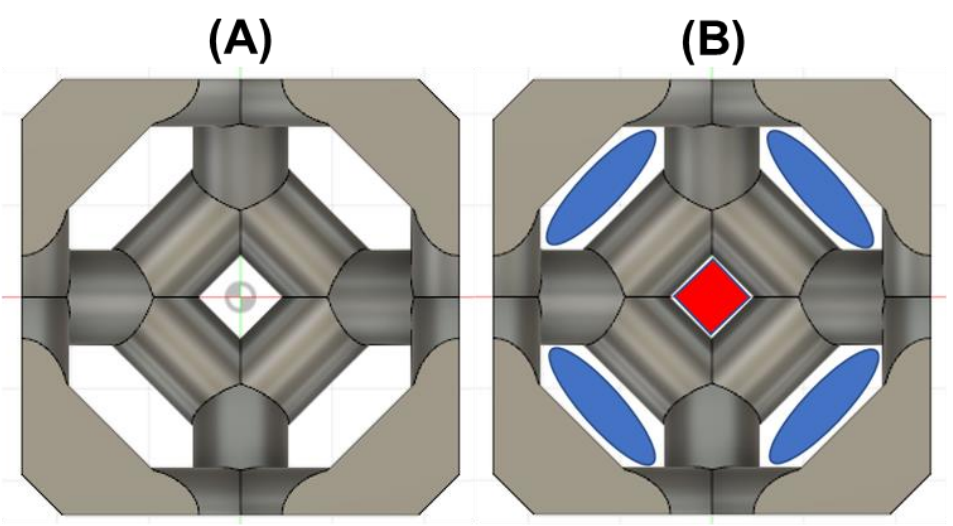 Computational Modeling Of Fluid Flow Through Open Cellular StructuresLucas AttiaUniversity of Delaware, May 2021
Porous media have long been used for chemical engineering applicationsthat require mass and heat transfer, including catalysis and separations. Recently, additive manufacturing has allowed for the design of structured mesoscale porous structures, including open cellular structures and lattices,which can be used for applications ranging from biomedical implants to drug delivery to aeroelastic wing design. These structures have also garnered interest as a means to generate ordered porous media which can exhibit desired surface properties and imparts predictability. However, limited work has investigated the flow dynamics through these structures. This thesis leveraged computational fluid dynamics (CFD) as a tool to simulate fluid flow through open cellular structures. The flow phenomena through individual unit cells was investigated, and flow conditioning through unit cell pores was observed. The influence of unit cell geometry and flow conditions on pressure drop was also investigated for cubic unit cells. Theoretical model fits were evaluated, and it was found that the Darcy-Weisbach model may be a useful tool to evaluate pressure drop over individual unit cells. Pressure drop was shown to be decoupled for cubic unit cells under laminar flow in lattice structures, suggesting the feasibility of implementing optimization for the design of lattice structures with specific flow dynamics. Finally, a portable optimization workflow was developed to optimize lattice designs with a minimum pressure drop.
-
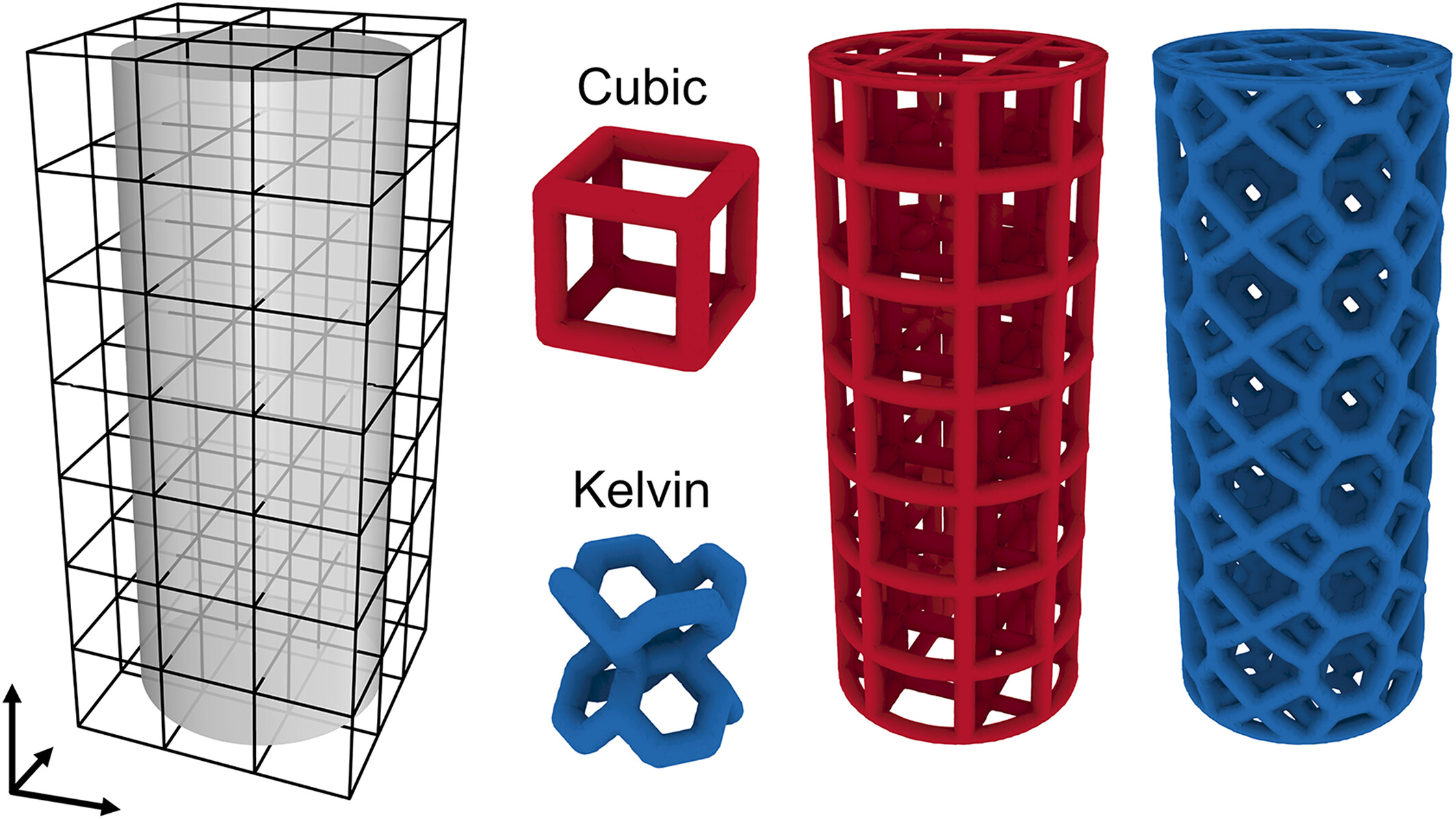 Scalable 3D-printed lattices for pressure control in fluid applicationsIan R Woodward, Lucas Attia, Premal Patel, and 1 more authorAIChE J., Dec 2021
Additive manufacturing affords precise control over geometries with high degrees of complexity and pre-defined structure. Lattices are one class of additive-only structures which have great potential in directing transport phenomena because they are highly ordered, scalable, and modular. However, a comprehensive description of how these structures scale and interact in heterogeneous systems is still undetermined. To advance this aim, we designed cubic and Kelvin lattices at two sub-5 mm length scales and compared published correlations to the experimental pressure gradient in pipes ranging from 12-52 mm diameter. We further investigated all combinations of the four lattices to evaluate segmented combinatorial behavior. The results suggest that a single correlation can describe pressure behavior for different lattice geometries and scales. Furthermore, combining lattice systems in series has a complex effect that is sensitive to part geometry. Together, these developments support the promise for tailored, modular lattice systems at laboratory scales and beyond.


2020
-
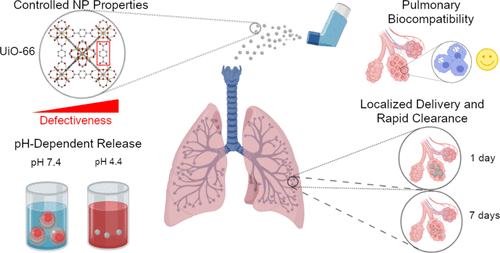 Evaluating UiO-66 Metal-Organic Framework Nanoparticles as Acid-Sensitive Carriers for Pulmonary Drug Delivery ApplicationsBader M Jarai, Zachary Stillman, Lucas Attia, and 3 more authorsACS Appl. Mater. Interfaces, Sep 2020
Developing novel drug carriers for pulmonary delivery is necessary to achieve higher efficacy and consistency for treating pulmonary diseases while limiting off-target side effects that occur from alternative routes of administration. Metal-organic frameworks (MOFs) have recently emerged as a class of materials with characteristics well-suited for pulmonary drug delivery, with chemical tunability, high surface area, and pore size, which will allow for efficient loading of therapeutic cargo and deep lung penetration. UiO-66, a zirconium and terephthalic acid-based MOF, has displayed notable chemical and physical stability and potential biocompatibility; however, its feasibility for use as a pulmonary drug delivery vehicle has yet to be examined. Here, we evaluate the use of UiO-66 nanoparticles (NPs) as novel pulmonary drug delivery vehicles and assess the role of missing linker defects in their utility for this application. We determined that missing linker defects result in differences in NP aerodynamics but have minimal effects on the loading of model and therapeutic cargo, cargo release, biocompatibility, or biodistribution. This is a critical result, as it indicates the robust consistency of UiO-66, a critical feature for pulmonary drug delivery, which is plagued by inconsistent dosage because of variable properties. Not only that, but UiO-66 NPs also demonstrate pH-dependent stability, with resistance to degradation in extracellular conditions and breakdown in intracellular environments. Furthermore, the carriers exhibit high biocompatibility and low cytotoxicity in vitro and are well-tolerated in in vivo murine evaluations of orotracheally administered NPs. Following pulmonary delivery, UiO-66 NPs remain localized to the lungs before clearance over the course of seven days. Our results demonstrate the feasibility of using UiO-66 NPs as a novel platform for pulmonary drug delivery through their tunable NP properties, which allow for controlled aerodynamics and internalization-dependent cargo release while displaying remarkable pulmonary biocompatibility.

2019
-
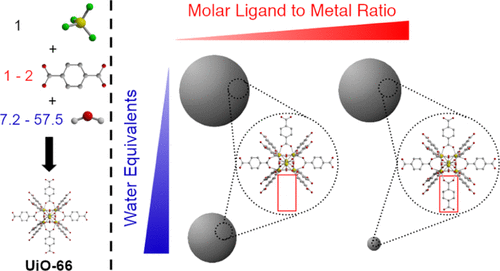 Controlling Size, Defectiveness, and Fluorescence in Nanoparticle UiO-66 Through Water and Ligand ModulationGerald E Decker, Zachary Stillman, Lucas Attia, and 2 more authorsChem. Mater., Jul 2019
UiO-66, a zirconium(IV) metal-organic framework (MOF) comprised of six-metal clusters and terephthalic acid ligands, displays excellent thermal and chemical stability and has functions in gas storage, catalysis, selective adsorption, and drug delivery. Though the stability of UiO-66 is highly advantageous, simultaneous synthetic control over particle size and defectiveness of UiO-66 remains difficult to attain. Using an acid-free solvothermal synthesis, we demonstrate that particle size, defectiveness, and inherent fluorescence of UiO-66 can be precisely tuned using the molar ligand to metal ratio, quantified water content, and reaction time during synthesis. These three synthetic handles allow for reproducible modulation of UiO-66 defectiveness between 0 and 12% and particle size between 20 to 120 nm, while maintaining high crystallinity in the nanoparticles that were formed. We also find that particle defectiveness is linked to common over-estimation of particle size measurements obtained via dynamic light scattering (DLS) and propose a model to correct elevated hydrodynamic diameter measurements. Finally, we report inherent fluorescence of non-functionalized UiO-66, which exhibits peak fluorescence at a wavelength of 390 nm following excitation at 280 nm and is maximized in large, defect-free particles. Overall, this synthetic approach and characterization of defect, size, and fluorescence represent new opportunities to tune the physiochemical properties of UiO-66.
